
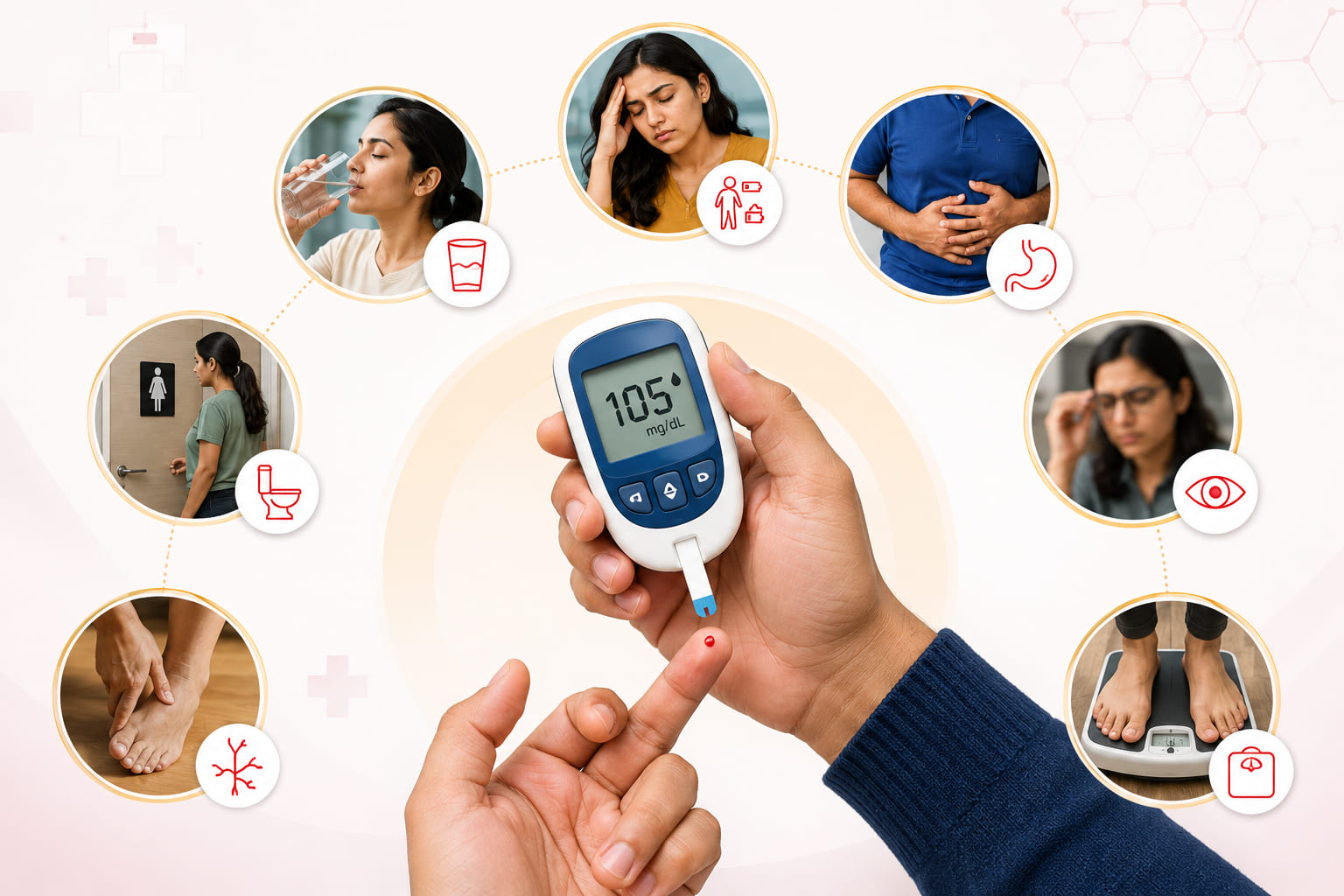
Most people find out they have diabetes during a routine blood test — long after their body had already been sending out signals.
That is the tricky part about this condition. The early signs of diabetes are so easy to brush off. Feeling tired? Must be work. Drinking more water? Probably the heat. Losing a little weight? Great news, right?
But these things together — or even just one of them persisting for weeks — could be your body quietly asking for help. Here is what to watch out for.
Why does diabetes show up the way it does?
To understand the diabetes warning signs, you need to know what is happening inside the body. When you eat, your body breaks down the food into glucose (sugar).
In diabetes, this system breaks down. Either the body does not make enough insulin (Type 1) or does not use it properly (Type 2). Glucose builds up in the blood rather than reaching the cells, and that is where blood sugar symptoms begin.
The early warning signs of diabetes
Extreme thirst and dry mouth
High blood sugar pulls fluid from your body’s tissues. This makes you feel constantly thirsty — no matter how much water you drink. Your mouth feels dry and sticky. This is one of the most consistent blood sugar symptoms in body.
Frequent urination
Because you are drinking more, you are urinating more. But there is more to it — your kidneys are working overtime to filter the excess glucose, pulling more water along with it. Waking up multiple times at night to urinate is a common red flag.
Unusual fatigue
Your cells are being starved of glucose, even though there is plenty in your blood. Without energy, you feel drained — even after a full night’s sleep. This kind of bone-deep tiredness that does not go away with rest is a major warning sign of diabetes.
Blurry vision
High blood sugar causes the lens of your eye to swell, which changes how you see. Things look blurry or out of focus — especially in the morning. Many people assume they need new glasses, not realizing their blood sugar is the problem.
Unexplained weight loss
When the body cannot use glucose for fuel, it starts burning fat and muscle instead. This can lead to noticeable weight loss even when you are eating normally — or even more than usual. This is especially common in Type 1 diabetes.
Increased hunger
Because your cells are not getting the glucose they need, your body keeps sending hunger signals — even right after a meal. You eat but never feel truly satisfied. This is one of the more overlooked early signs of diabetes.
Slow-healing wounds
High glucose levels damage blood vessels and affect circulation. This means that even a small cut or bruise takes much longer to heal. Frequent skin infections or wounds that do not close well are a serious blood sugar symptom in body.
Tingling or numbness in hands and feet
Prolonged high blood sugar damages nerves — a condition called neuropathy. You may feel a pins-and-needles sensation, numbness, or burning in your fingers or toes. This is more common as diabetes progresses, but it can also appear early.
Infections that happen again and again
If your blood glucose levels are high, you will provide a favorable environment for bacteria and fungi. You might regularly develop UTIs or even yeast infections, especially women. In men, infections can be fungal. If there is no identifiable cause for your recurring infections, you must take notice.
Darkening of the skin
One of the first signs of diabetes is acanthosis nigricans, which causes dark patches to develop in skin folds, such as the neck, armpits, or groin.
Who is most at risk?
Anyone can develop diabetes, but certain factors significantly increase your risk.
You are at higher risk if you:
- Have a parent or sibling with diabetes
- Are you overweight or have a sedentary lifestyle
- Are over the age of 35
- Have high blood pressure or high cholesterol
- Had gestational diabetes during pregnancy
- Your eating habits include refined carbs and sugar
In India, the risk is particularly high — and rising. Indians have a worse tendency to get type 2 diabetes as compared to Western populations. This makes early detection of blood sugar symptoms in body even more important.
What you can do right now
Track your symptoms honestly
If you have noticed two or more of the signs above for more than 2 weeks, write them down. When you see it all together, it is harder to dismiss.
Get a simple blood test done
Complete your HbA1c test, commonly known as a fasting blood sugar test, which can confirm whether your blood sugar is in the normal range. It takes less than five minutes and can tell you a great deal. This is the single most important step you can take.
Make small lifestyle changes now
Even before a diagnosis, cutting back on sugary drinks, adding a 30-minute walk to your day, and eating more vegetables can dramatically reduce the risk of progressing to full diabetes — especially if you are in the pre-diabetic stage.
Do not wait for things to get worse
Diabetes is manageable when caught early. Left unattended, it can damage your kidneys, eyes, heart, and nerves over time. Early action is always better than late intervention.
When should you see a doctor?
Book an appointment if:
- You have three or more symptoms from the list above
- You have a family history of diabetes and have never been tested
- You are feeling persistently tired, thirsty, or unwell with no clear cause
- Your wounds are healing slowly, or you are getting infections frequently
- You are over 35 and have not had a blood sugar check in the past year
Get checked before it becomes serious
If you are in Kolkata and have been noticing any of these symptoms, do not put it off. A quick consultation can give you real answers and peace of mind. Find an experienced General Physician in South Kolkata through Smart Compass and take that first step today.
Diabetes does not appear overnight. It builds slowly — and it speaks softly at first. Extreme thirst. Constant tiredness. A wound that will not heal. These are not random inconveniences. They are the first symptoms of diabetes in your body.
The best thing you can do is listen — and act early. Take doctor’s advice and get your blood tests done to know where you stand. That one step could change everything.