
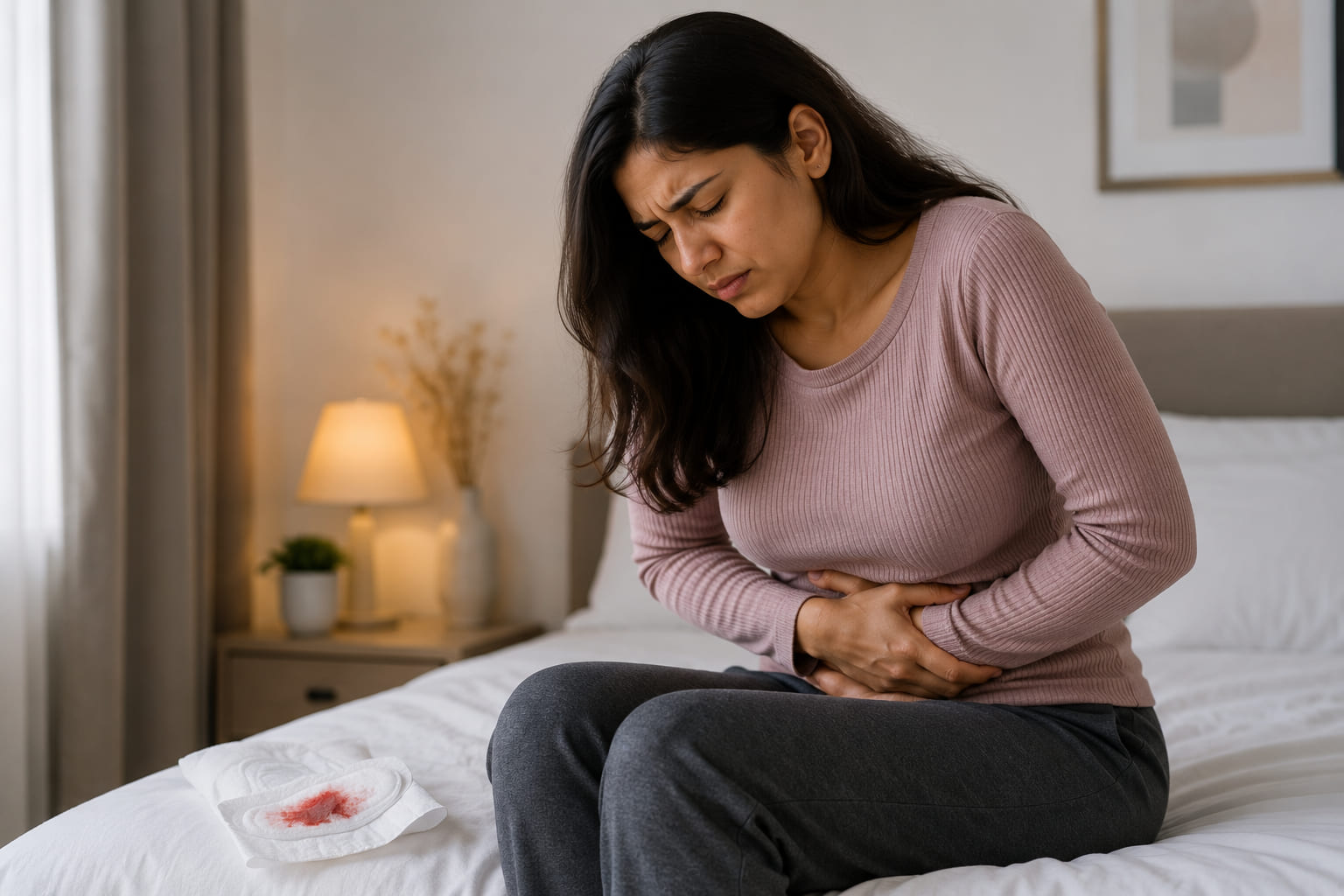
Every month, millions of women dread their period — not because it is inconvenient, but because it is completely overwhelming.
Soaking through a pad every hour. Passing large clots. Feeling so tired you can barely get off the couch. You do not have to just push through it every month.
What counts as a heavy period?
Doctors use the term menorrhagia for periods that are unusually heavy or long. A period is considered heavy if:
- You need to change your pad or tampon every 1 to 2 hours
- You pass blood clots larger than a 50-paise coin
- Your period lasts longer than 7 days
- You have to double up on protection — pad and tampon together
- You bleed through clothing or bedding regularly
If even one of these feels familiar, it is worth paying attention to.
Common Heavy Period Causes
Heavy periods rarely happen for no reason. Here are the most common causes:
Hormonal imbalance
When estrogen and progesterone are out of balance, the lining of the uterus builds up too much and sheds heavily during your period. This is one of the most common heavy periods causes, especially in teenagers and women approaching menopause.
Uterine fibroids
You may witness non-cancerous tissue growths in your uterus, called Fibroids. They are very common and can significantly increase the amount and duration of bleeding. Fibroids are a leading reason why women experience heavy periods with blood clots.
Endometriosis
Tissue growth outside the uterus is a common reaction, similar to that of the uterine lining. It causes heavy bleeding, severe cramps, and sometimes clotting. It is often underdiagnosed for years.
PCOS
Polycystic ovary syndrome affects how your ovaries function and can cause irregular ovulation. When ovulation does not happen regularly, the uterine lining builds up — leading to heavier periods when it finally sheds.
Thyroid disorders
An underactive thyroid (hypothyroidism) slows many body processes — including the normal regulation of your menstrual cycle. Heavy and irregular periods are a common symptom.
Bleeding disorders
Conditions like von Willebrand disease affect how blood clots. Women with these disorders often have heavy periods from a young age and may not realize a clotting issue is the reason.
Certain medications
Blood thinners and some non-steroidal anti-inflammatory drugs (like aspirin) can increase menstrual flow. Even some IUDs (non-hormonal copper ones) can make periods heavier.
Why Heavy Periods With Blood Clots Happen?
Seeing clots during your period can be alarming. Here is what is actually happening: when blood flows out too quickly, your body’s natural anticoagulants do not have enough time to work. The blood pools and clots before it exits.
Small clots (smaller than a coin) are usually normal. But large, frequent clots — especially alongside heavy flow — are a sign that something needs to be checked. Fibroids, adenomyosis, and hormonal imbalances are the most common reasons for heavy periods with blood clots.
Health risks you should not ignore
Heavy periods are not just uncomfortable — they carry real health risks:
- Iron deficiency anemia — losing too much blood depletes iron stores, leaving you exhausted, breathless, and pale
- Fatigue from constant blood loss depletes the body’s energy each month.
- Disruption in daily routines due to inability to work, study, or attend other activities because of blood loss and pain.
- Disease complications due to a lack of treatment for fibroids, endometriosis, or thyroid problems.
The longer heavy bleeding goes untreated, the harder it can become to manage.
Heavy Periods Treatment & Heavy Menstrual Bleeding Remedy
Eating legumes such as spinach, lentils, and jaggery would go a long way towards controlling anemia. Consuming a healthy diet is another way to keep your hormones balanced. It is crucial to hydrate your body and get adequate sleep throughout this process.
Medication
Tranexamic acid is among the most commonly prescribed medications for heavy bleeding because it ensures that the blood clots faster. Anti-inflammatory drugs such as ibuprofen also work by reducing bleeding while on your period. In addition, hormonal medications or a hormonal IUD are likely to regulate the period.
Underlying condition treatment
If there are fibroids and polyps, there are simple procedures you can undergo to have them surgically removed. Hormones can treat endometriosis, and PCOS and thyroid problems can be fixed using hormone-balancing drugs.
Surgical options
If your condition is serious, then do not skip medication. Procedures like endometrial ablation (removing the uterine lining) or, in rare cases, hysterectomy may be considered. These are last-resort options, carefully discussed with your doctor.
When should you see a doctor?
Do not wait. Reach out to a gynecologist if:
- You are soaking through a pad or tampon in under 2 hours
- Your period regularly lasts more than 7 days
- You are passing large or frequent clots
- You feel constantly tired, dizzy, or short of breath around your period
- Bleeding is interfering with your work, sleep, or daily life
- You have heavy bleeding after sex or between periods
A heavy period is not something you simply have to live with every month. It is your body telling you that something is off — and that it needs attention.
Whether the cause is hormonal, structural, or something else entirely, there are effective heavy period treatments available today. The first step is simply deciding you deserve to feel better — and then talking to someone who can help.
Get expert help close to home
If you are in Kolkata and dealing with heavy or painful periods, you deserve proper answers — not just guesswork. Consult a trusted Gynecologist in South Kolkata through Smart Compass for an accurate diagnosis and a treatment plan that fits your life.